
[A drone shot of the exterior of Westfield Heritage Village’s blacksmith shop.]
[NARRATOR:] This is the Westfield Blacksmith Shop, located in the district of Flamborough, Ontario. It dates back to the 1880s, during the late Victorian period.
[An interior shot of the blacksmith shop. Three blacksmiths (two male and one female) are seen standing around amongst various blacksmithing tools and equipment.]
[A close up shot of a bellows pumping air out.]
[NARRATOR:] By this time, small, local blacksmith shops had surrendered the market for most readymade goods to the steam powered casting factories in urban areas.
[A black and white photo of the John L. Woodbury Blacksmith Shop located in Hamilton, Ontario in the 1870s.]
[A black and white photo of three male blacksmiths posing inside a blacksmith shop surrounded by horseshoes, anvils, and various blacksmithing tools and equipment.]
[A black and white photo of a busy city road in Hamilton, Ontario.]
[A shot of two blacksmiths working on a piece of metal. One is holding a metal rod that has just been heated in the forge and places it on an anvil. The other blacksmith stands across from him on the opposite side of the anvil.]
[NARRATOR:] Instead, most blacksmiths turned to concentrate on providing repairs, improvements, and horse related goods.
[A black and white photo of a farrier attaching a horseshoe onto a horse. Three other men stand around him as they watch him perform his duty.]
[NARRATOR:] However, blacksmiths were not yet banished to a horse-exclusive existence. They had a hidden ally from an unexpected place.
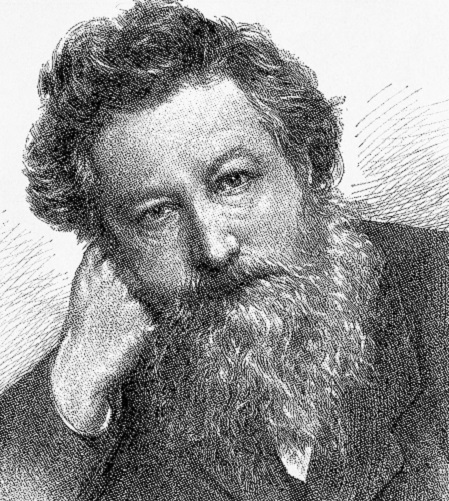
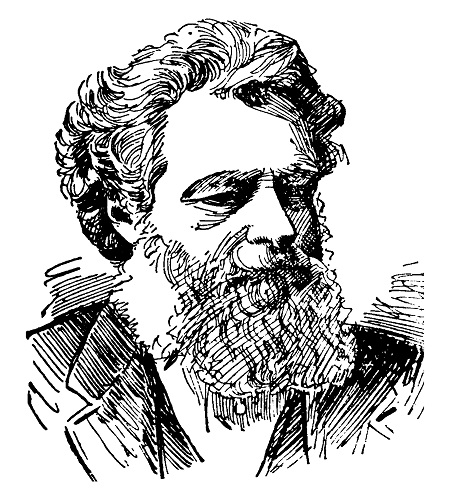
[An illustration of William Morris. A black and white head shot of William Morris. An illustration of a head shot of William Morris.]
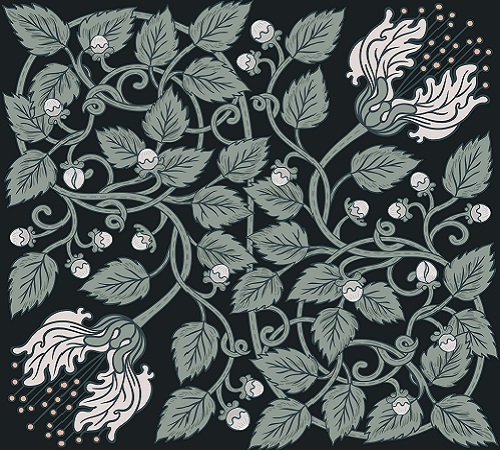
[An artistic interpretation by Linn Warme of William Morris in the style of the Arts and Crafts Movement.]
[A close up photo of a metal door knocker inspired by the Arts and Crafts Movement aesthetic.]
[NARRATOR:] William Morris was the quintessential overachieving Victorian polymath. He was a designer and a poet, an artist and a novelist, a conservationist and a social activist. Most importantly to blacksmiths however, he is also credited as the founder of the Arts and Crafts Movement.
[A black and white photo of men working at an assembly line in a factory.]
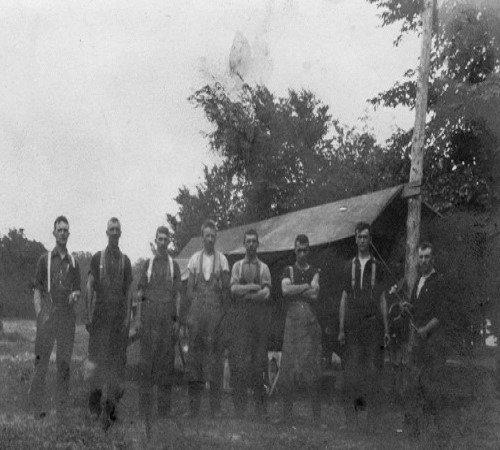
[A black and white photo of several men during the late 1800s standing in front of a blacksmith shop. A horse drawn carriage can be seen on the left hand side of the photo, along with an empty carriage on the right hand side.]
[NARRATOR:] During the Industrial Revolution, with the rise of mass-production and machinery, Morris, among many other artisans, wished to recapture the spirit and quality of pre-industrial craftsmanship.
[An illustration of an early blacksmith working inside of a blacksmith shop. A young girl can be seen peeking at the blacksmith’s work at the threshold of the blacksmith shop.]
[A blacksmith hammering a metal rod over the horn of an anvil.]
[A blacksmith twisting a piece of metal using a vice attached to a table inside of the blacksmith shop.]
[NARRATOR:] He strongly believed that the hands-on connection between the artist and their handcrafted pieces was crucial in the creation of not just genuine fulfillment, but also the highest quality products.
[Close up of a blacksmith’s hands. He presents the piece of metal to the viewer.]
[A blacksmith uses a hammer and the anvil’s horn to form a hoop to the piece of metal rod.]
[Shots of the gate latch resting on an anvil.]
[NARRATOR:] This design aesthetic rose from being a stylistic fad for the rich to being a broad cultural movement throughout the Victorian world. Thus, there was a demand for handcrafted ironwork, providing blacksmiths a niche market in which to put their skills to gainful purpose.
[A close up shot of the finished Arts and Crafts Movement inspired gate latch.]
[A blacksmith uses a paintbrush to paint a metal poppy flower sculpture with a red tint.]
[A close up shot of a few blacksmithing tools laid out on a table.]
[A female blacksmith’s apprentice and a male blacksmith stand side by side inside a blacksmith shop.]
[A shot of a male blacksmith hand cranking a blower inside a dimly lit blacksmith shop.]
[A female blacksmith’s apprentice sawing a thin metal rod over a table inside a blacksmith shop.]
[NARRATOR:] Here, the blacksmith, traditionally the purveyor of practical metal goods, begins their journey as creative artisans. The blacksmith artists have been born and by artists, we mean both male and female.
[Female blacksmith standing and talking to the camera.]
[FEMALE BLACKSMITH:] It’s a common misconception that women did not blacksmith historically, but the written records that we have tells us that’s just not the case. In the Middle Ages, in England and Europe, any person who was involved in a trade or an artisan, had to be part of a guild. And the guilds were sort of like modern trade unions, but they were also responsible for training people. So, if you were not part of a guild, they would not allow you to work in your given trade.
[FEMALE BLACKSMITH:] So, we have written records of guild memberships. One of them was in London, England. They were called “The Worshipful Company of Blacksmiths”, and in 1434, their list of membership included 65 men and 2 women. So, certainly a male dominated trade, but women have been blacksmithing for at least 600 years that we have written record of.
[FEMALE BLACKSMITH:] Now, in North America or Turtle Island, we didn’t have the guild system as much, but we do have written census records that give us information about women blacksmithing in this part of the world.
[FEMALE BLACKSMITH:] So, in 1890, there was a census done in the United States and everyone had to list their profession.
[FEMALE BLACKSMITH:] So, there were over 200,000 men who listed “blacksmith” as their profession as that time, and there were 58 women. So, again, women have been involved in blacksmithing since we have been recording people being involved with it, but definitely in not as big numbers as the men are.
[All three blacksmiths working together inside the blacksmith shop.]
[FEMALE BLACKSMITH:] I think it’s important for women and girls to know about.
[A drone shot of Westfield Heritage Village’s blacksmith shop’s exterior]
[NARRATOR:] Westfield Heritage Village is located in the picturesque countryside between Cambridge and Hamilton.
[A map of Westfield Heritage Village.]
[NARRATOR:] On 204 hectares of conservation land, the site boasts a collection of more than 35 historical buildings.
[Sparks fly as a blacksmith uses a metal punch and a hammer to create a hole in a hot piece of metal placed on an anvil.]
[NARRATOR:] Some of these buildings, both on the exterior and interior, are decorated with metal ornaments in the style of the Victorian Arts and Crafts movement.
[A close up shot of the Arts and Crafts Movement inspired metal door hinge.]
[A blacksmith uses a metal punch and a hammer to create a hole on one side of the metal hinge.]
[NARRATOR:] It was the blacksmiths who made sure that locals could adorn their homes with the most stylish, aesthetic designs of the time. The blacksmith was not just a skilled metalworker, but a creative artist as well.
[Close up shot of the flames in the forge.]
[A drone shot of the exterior of Westfield Heritage Village’s blacksmith shop.]
[A close up shot of the completed Arts and Crafts Movement inspired metal door hinge, held by a blacksmith.]
[FEMALE BLACKSMITH:] So, our project that is being filmed today is to build a hinge for a barn door. This is the one that we have already finished. So, it’s made of two separate pieces. This piece would be attached to the door frame with bolts going through those holes. This piece goes on and this will be attached to the door.
[A shot of the three blacksmiths at Westfield Heritage Village standing inside of the blacksmith shop surrounded by blacksmithing tools and equipment.]
[One of the male blacksmiths getting dressed in his blacksmithing apron.]
[One of the blacksmiths presents the completed metal door hinge on a wooden table.]
[NARRATOR:] The Westfield blacksmiths have accepted a challenge that would have been encountered by many blacksmiths during the 1880s. A wealthy patron wishes to replace their outdated barn door hinges with something in style with the current Victorian artistic trends. Thus, the blacksmith must create something that works well practically, but is also aesthetically pleasing.
[PAUSE THE VIDEO]
[NARRATOR:] If you were a blacksmith facing this challenge, what would you do?
If you were a blacksmith in the 1880s, how would you create an "Arts and Crafts Movement" inspired hinge for a barn door? Watch the video below to find out how our blacksmith faced this challenge.